Sunflower oil, traded in two basic forms as crude and refined, is the most highly demanded vegetable oil in the food industry. In order for a buyer to make the right supply decision, they must understand the differences, application areas, and quality criteria of these two forms. In this article, we address the differences between crude sunflower oil and refined sunflower oil, which sectors prefer which form, and the reliable supply process through the expertise of Casalina.
What is Sunflower Oil?
Sunflower oil is a vegetable oil obtained from sunflower seeds, which have an oil content ranging from approximately 39% to 45%, through pressing and extraction methods. The resulting oil is classified as either crude or refined depending on its degree of processing.
Sunflower seed is one of the most important oilseeds in the world. Global sunflower production hovers around 39 million tons, and Turkey ranks among the top ten countries in production. Despite this, since Turkey cannot meet its domestic consumption on its own, it is a country that imports both sunflower seeds and crude oil.
What is the Difference Between Crude Sunflower Oil and Refined Sunflower Oil?
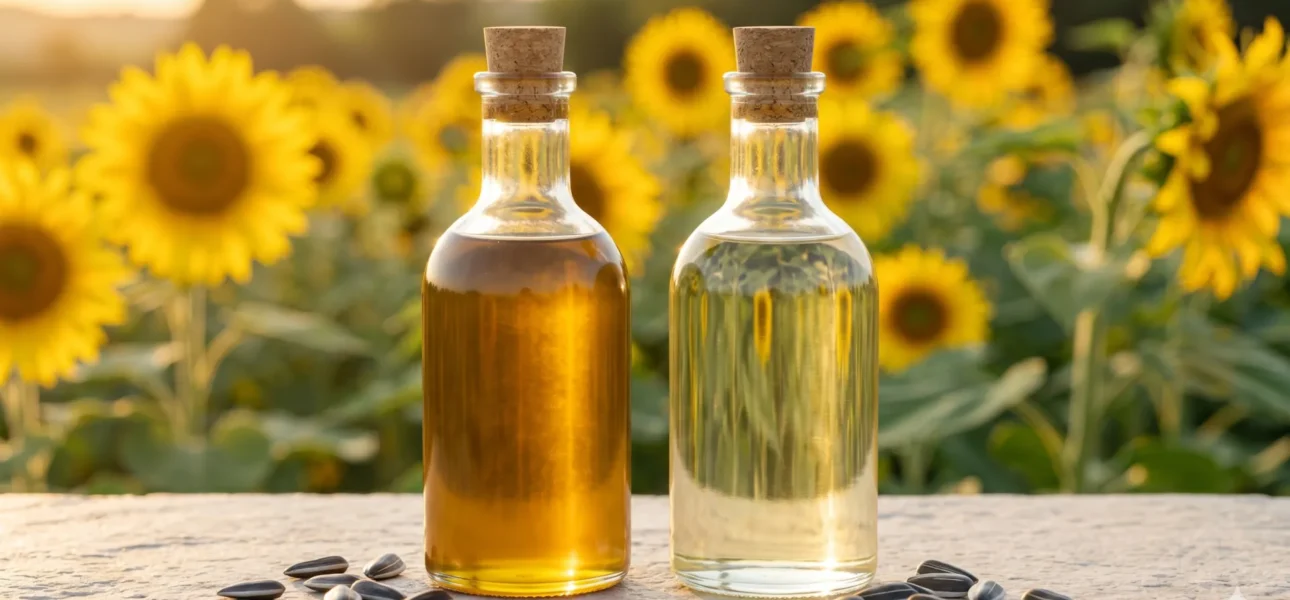
The fundamental difference between the two forms is the refining (purification) process. Crude sunflower oil is the unrefined oil directly obtained from the seed, whereas refined sunflower oil is a clear and neutral oil that has undergone refining stages such as neutralization, bleaching, and deodorization.
The table below summarizes the core differences between the two forms:
| Feature | Crude Sunflower Oil | Refined Sunflower Oil |
| Process | Unrefined, directly after pressing/extraction | Has undergone refining (neutralization, bleaching, deodorization) |
| Color & Odor | Dark color, distinct seed odor | Light-colored, clear, neutral odor and taste |
| Usage | Refinery and industrial raw material | Direct consumption, frying, food production |
| Shelf Life | Shorter | Longer and stable |
| Trade Format | Bulk, industrially oriented | Packaged or bulk, for consumers/industry |
In short: crude oil is the raw material for the refined product. While a vegetable oil refinery purchases and processes crude oil, a food manufacturer or market supplier generally prefers refined oil.
Which Sector Prefers Which Form?
Choosing the correct form depends entirely on the buyer’s business model:
- Vegetable oil refineries and the crushing industry: Purchase crude sunflower oil and process it in their own facilities to convert it into the final product. For these companies, the supply of crude oil forms the foundation of their cost balance.
- Food manufacturers and commercial kitchens: Prefer refined oil that is directly ready for use. A clear appearance, neutral taste, and long shelf life ensure production continuity.
- Wholesale and retail suppliers: Serve the end-consumer market with packaged refined sunflower oil.
Thanks to its affordable price and mild flavor, sunflower oil continues to be the most consumed cooking oil in Turkey, which means a steady demand for both forms.
Turkey’s Sunflower Oil Supply Landscape
Turkey is a country with a production deficit in sunflower oil and bridges this gap through imports. This situation highlights the immense importance of a reliable supply partner.
According to sector data, approximately 758,000 tons of crude oil were produced from 1.9 million tons of oilseed sunflower during the 2023/24 production season. This means that only about one-third of the country’s total crude sunflower oil supply is met by domestic production, with the remaining part completed through seed and crude oil imports. The vast majority of imports are sourced from Russia and Ukraine.
Furthermore, driven by the impact of drought and climate conditions, a decline in oilseed sunflower production is expected in recent seasons, which increases the need for imports. This landscape makes sunflower oil prices highly sensitive to the global supply-demand balance, Black Sea supply conditions, and foreign exchange rates.
Therefore, correct timing, a reliable origin, and a stable supply in sunflower oil procurement provide a direct competitive advantage.
Quality and Key Considerations in Sunflower Oil Supply
The following factors are decisive for a reliable sunflower oil supply:
- Correct form selection: Clarify whether your business requires crude or refined oil. If you are a refinery, crude oil is the right choice; if you are a food manufacturer, refined oil is the correct option.
- Quality parameters: Parameters such as free fatty acidity, peroxide value, color, and moisture determine the quality and shelf life of the product. Documenting these values is an absolute necessity.
- Origin and supply continuity: Sunflower oil is an import-dependent product. A reliable origin and predictable supply provide protection against price fluctuations.
- Logistics: Bulk oil transportation requires appropriate tanks and conditions. Managing logistics from a single source preserves product quality.
As Casalina, we manage these processes end-to-end for both crude and refined sunflower oil supply. By overseeing every stage from quality control to logistics, we provide our business partners with sunflower oil in the form that fits their needs, fully certified and delivered on time.
Frequently Asked Questions
Can crude sunflower oil be consumed directly?
Crude sunflower oil is generally not suitable for direct consumption; it must undergo a refining process. It is mainly traded as a raw material for refineries and industrial production.
Why is refined sunflower oil clearer and odorless?
Refined oil goes through neutralization, bleaching, and deodorization stages. These processes lighten the color of the oil, eliminate its odor, and remove free fatty acids, resulting in a clear and neutral product.
From which countries does Turkey import sunflower oil?
The vast majority of imports are made from Russia and Ukraine, which are the largest producers in the world.
Casalina for Reliable Sunflower Oil Supply
Whether it is used as a refinery raw material or a food production input, sunflower oil adds value to your business when supplied in the correct form and quality. Certified quality parameters, a reliable origin, and uninterrupted supply are indispensable for sustainable production.
Casalina becomes your reliable solution partner by managing the entire process end-to-end in the supply of crude and refined sunflower oil, alongside grain and soy products. Contact us today for a tailored price quote and supply terms specific to your business.
References
- TEPGE — Sunflower Situation and Outlook Report 2025 (Ministry of Agriculture and Forestry)
- Ministry of Agriculture and Forestry / TÜİK — Sunflower oil supply, production, and import data
- USDA — Turkey sunflower production and consumption projections (2025/2026)
- Vegetable oil industry sectoral feasibility and market reports